Help Without the Help DeskJeeves
Halved video-creation time, lifted learner engagement, and made in-product help feel like one calm, trustworthy system.
- Role
- Product UI audit, help-video system, marketing assets
- Team
- Marketing & product (Abhilash, Asha, Julie)
- Timeline
- 2023 to 2026 (ongoing)
- Platform
- Web app + in-product help
- 300%
- Increase in learner engagement
- 50%
- Less video-creation time
- 13,000+
- Training content searches
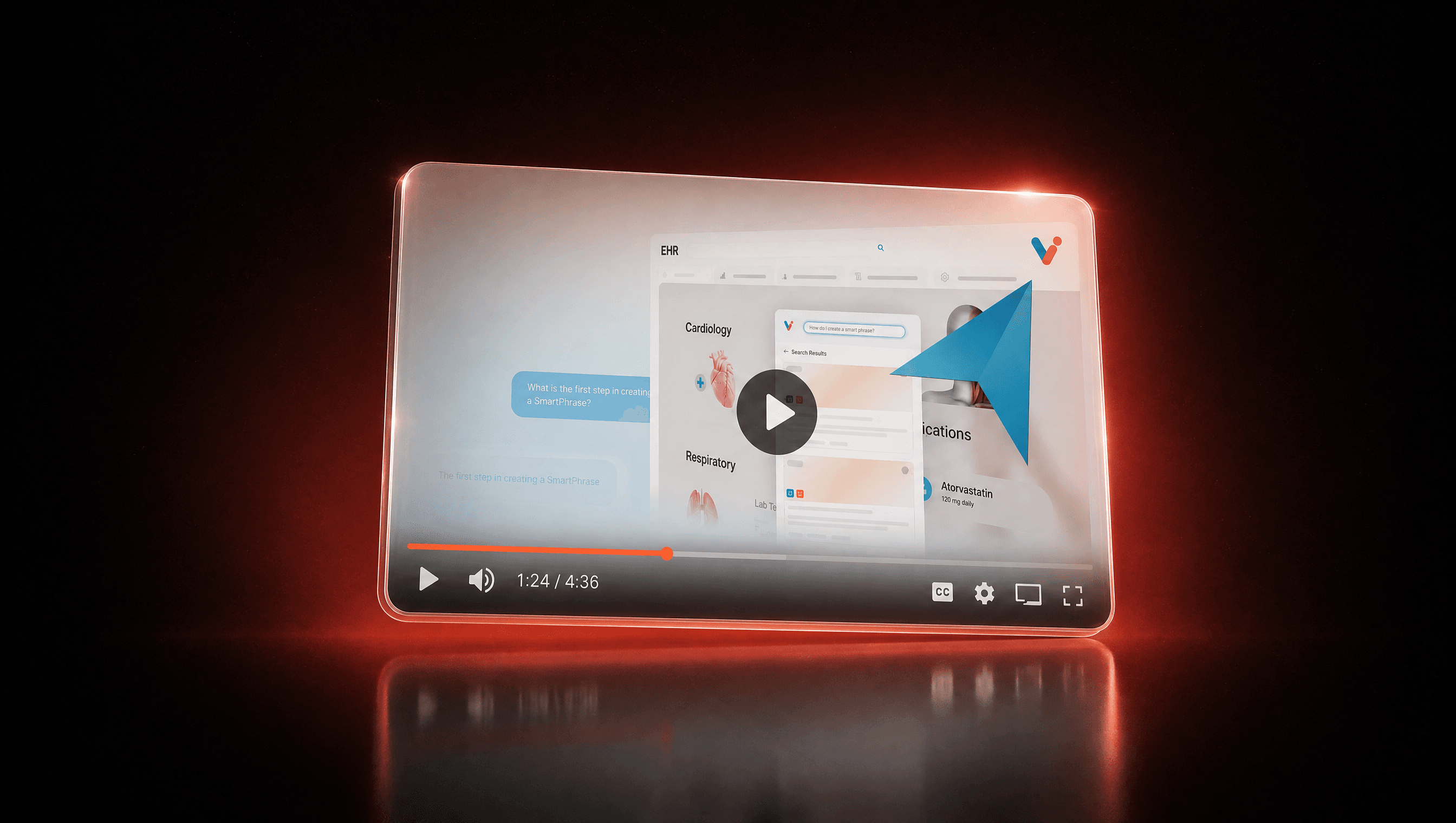
Helping nurses and doctors learn their medical software without ever leaving it. I audited a confusing product and built a 15+ video help system so people could get unstuck without phoning a help desk.
01 · Context & problem
Two needs pulling in the same direction
Jeeves had two things to sort out at once. The product itself was a little confusing in places (settings, asset management, finding things), and users needed clear guidance to adopt features without calling for help.
In a hospital, "go read the documentation later" is not really an option. The help had to meet people in the moment.
02 · Role & process
Audit first, then build the help
I owned the audit, the tutorial system, and the marketing assets that came out of it.
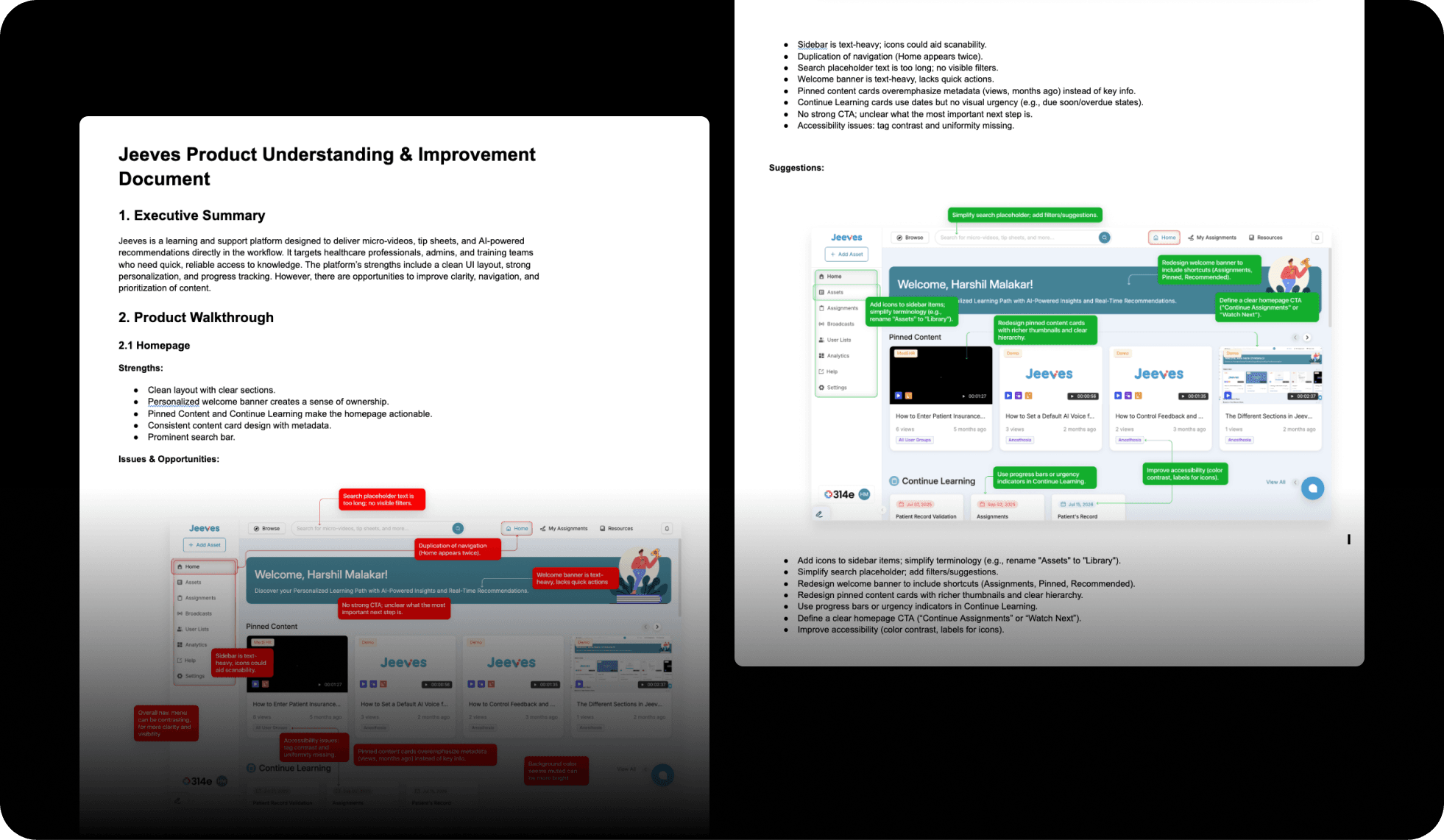
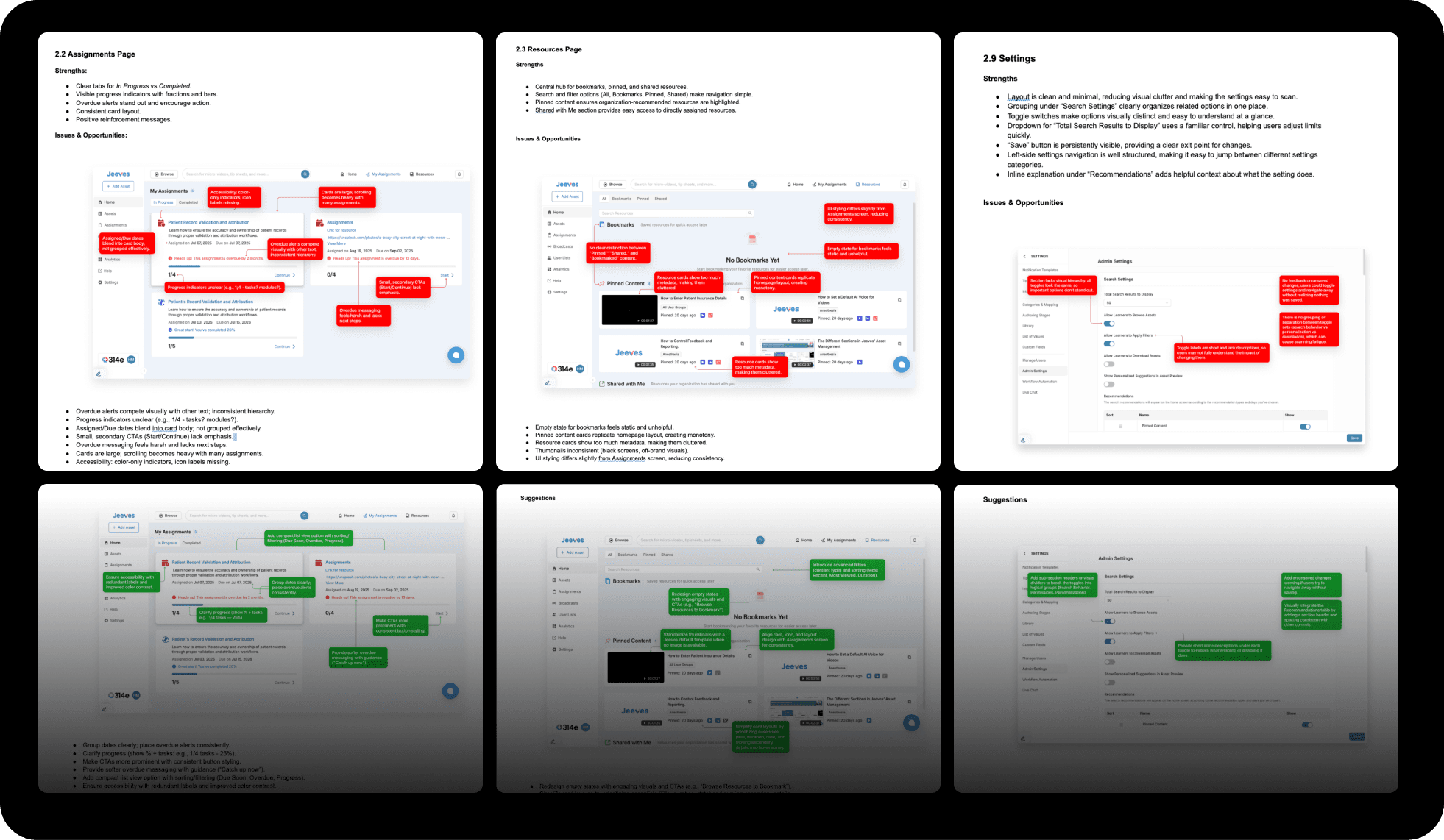
Ran a product UI audit
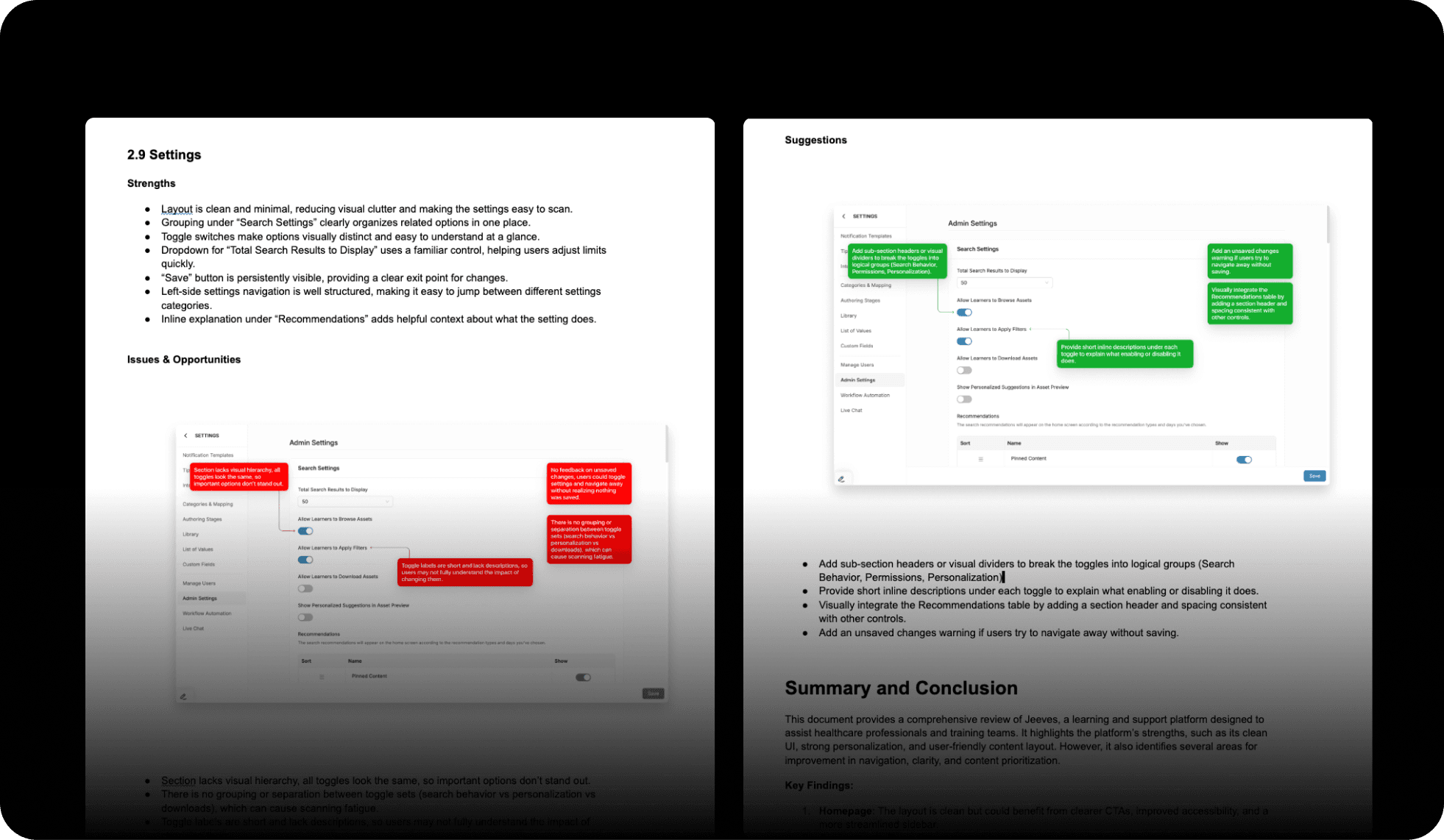
Inventoried the components, and checked the Settings and Assets flows against real tasks.
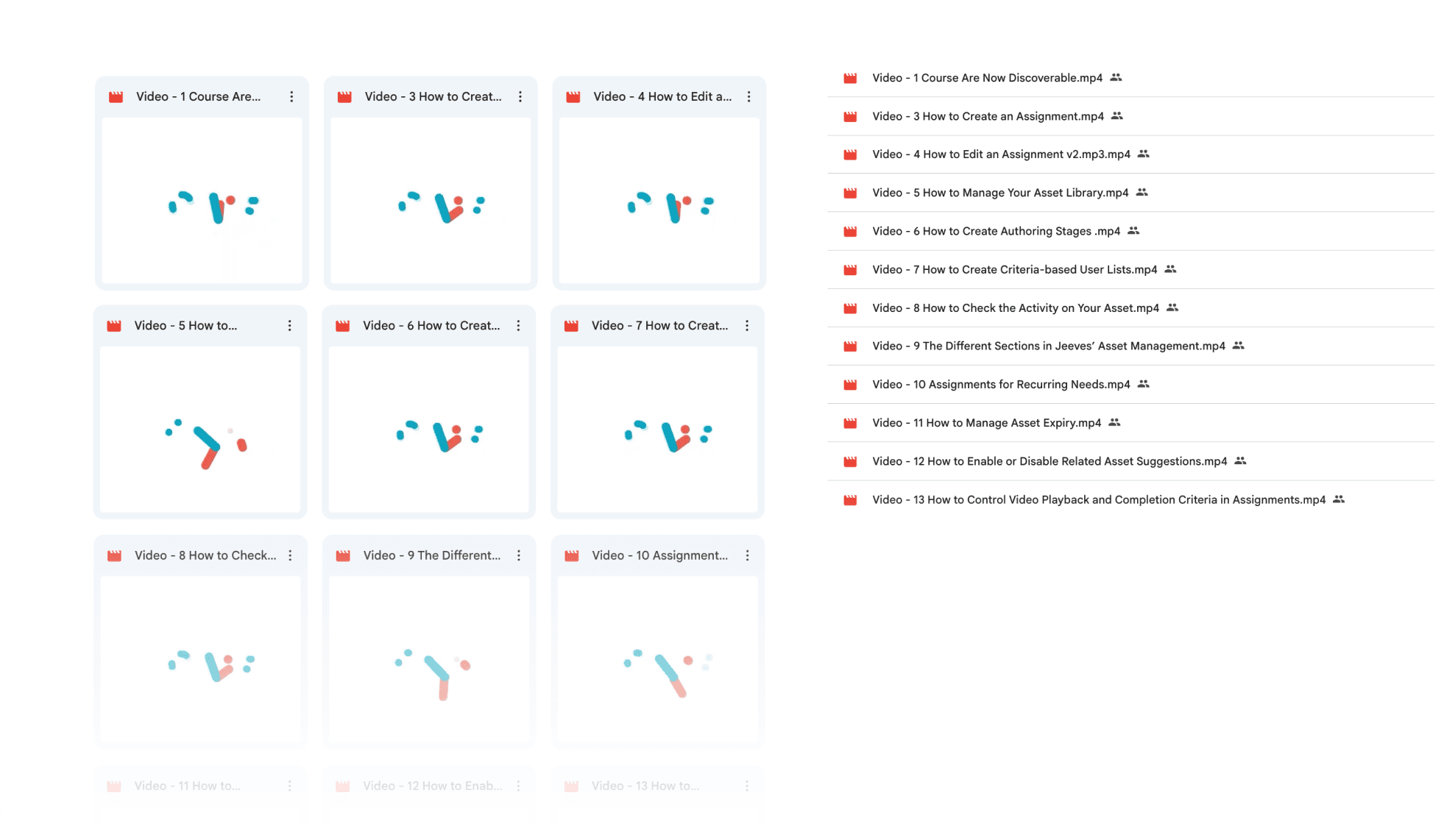
Built the tutorial library
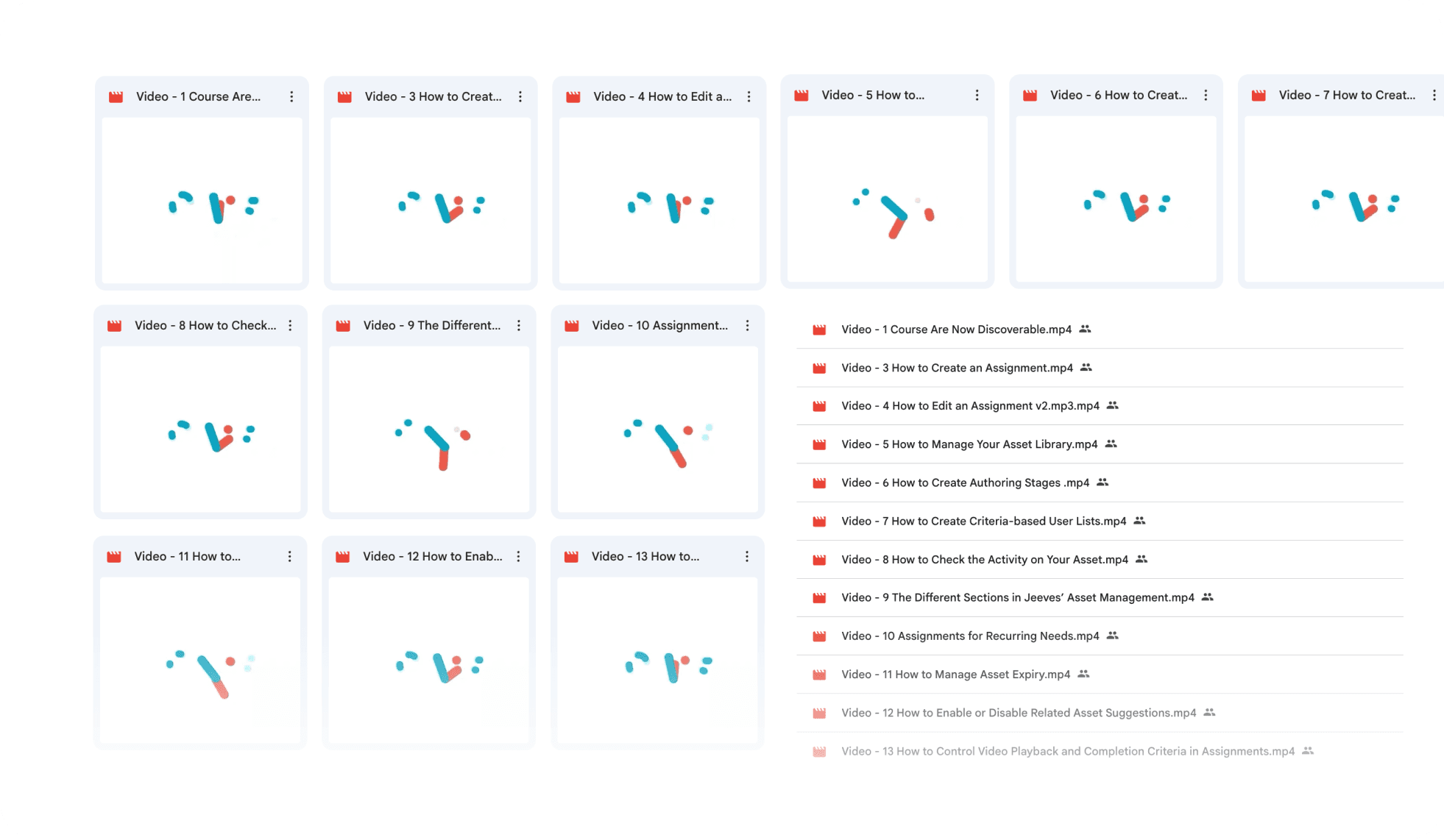
A structured library of 15+ in-product tutorials, each with scripted voiceover.
Designed the marketing assets
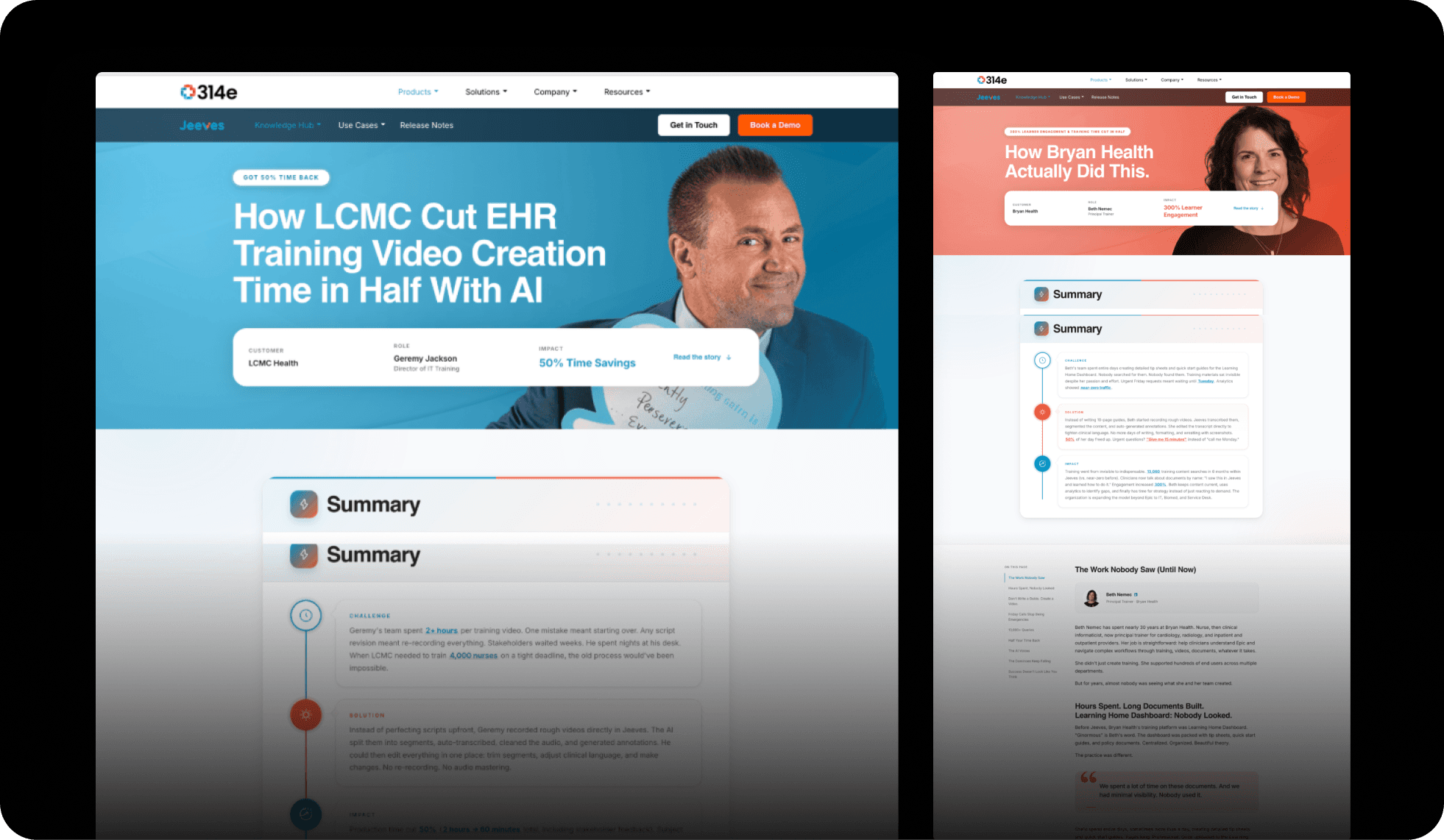
Marketing-site assets and customer-story pages.
03 · Key decisions
Decisions toward trust and consistency
Reworked the Assets screen
What. Proposed a clearer "add asset" button and row-level states (including a loud red one for things that need attention) for teams juggling big content libraries.
Why. Training teams manage hundreds of assets, and the old screen made it weirdly hard to add new content or see, at a glance, what was on fire.
Added a Settings change log
What. Proposed an auditable record of what changed, who changed it, and when.
Why. Healthcare is heavily regulated. Admins need to prove who touched which setting, so a paper trail is not a nice-to-have, it is the job.
One format for every tutorial
What. Standardized a single template and one voiceover style across the whole library.
Why. If every tutorial looks and sounds like a different person made it, people quietly stop trusting them. Sameness, here, is what builds confidence.
04 · Solution & artifacts
A sharper Jeeves surface
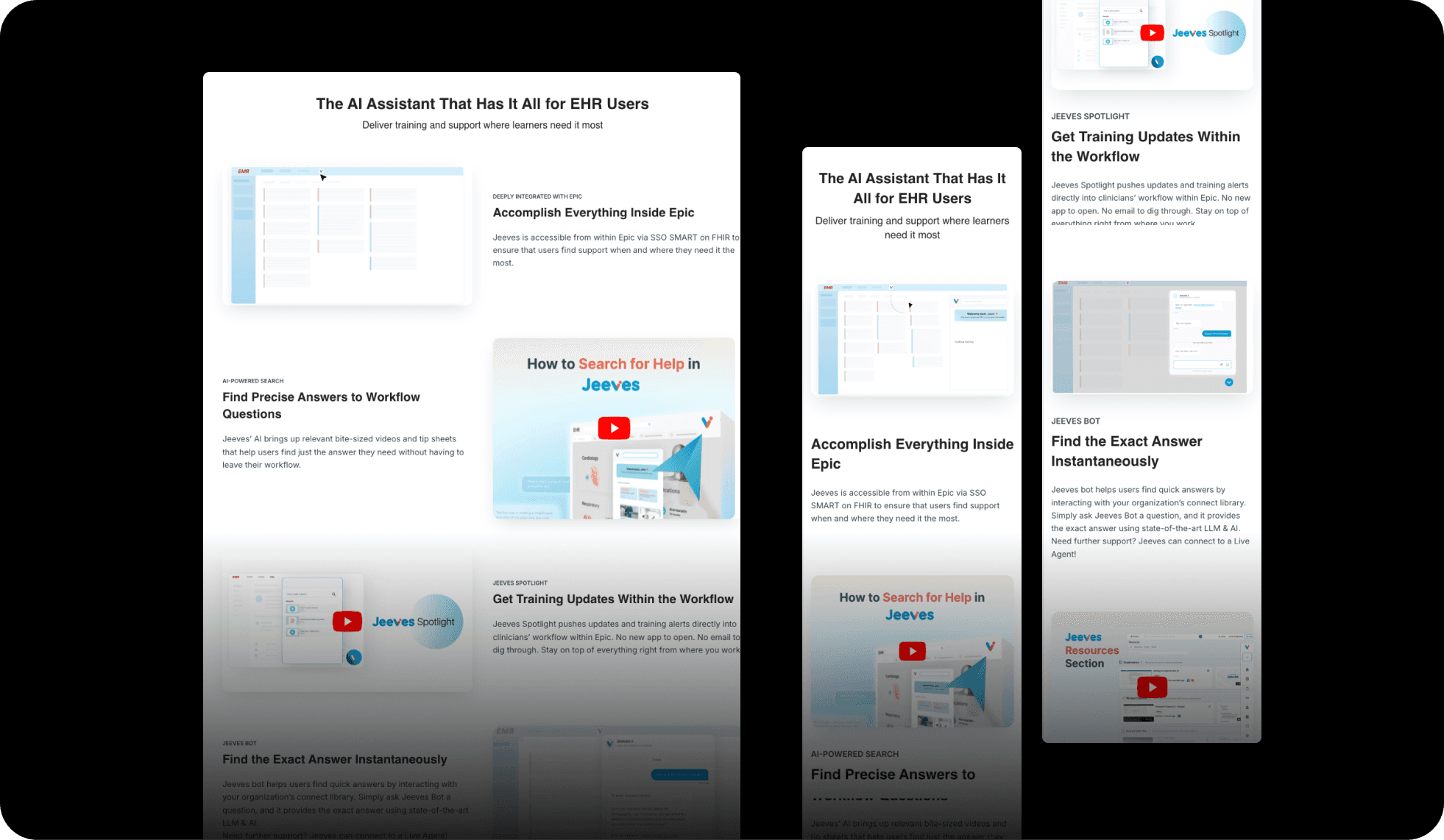
Feature sections, including a mobile-responsive version
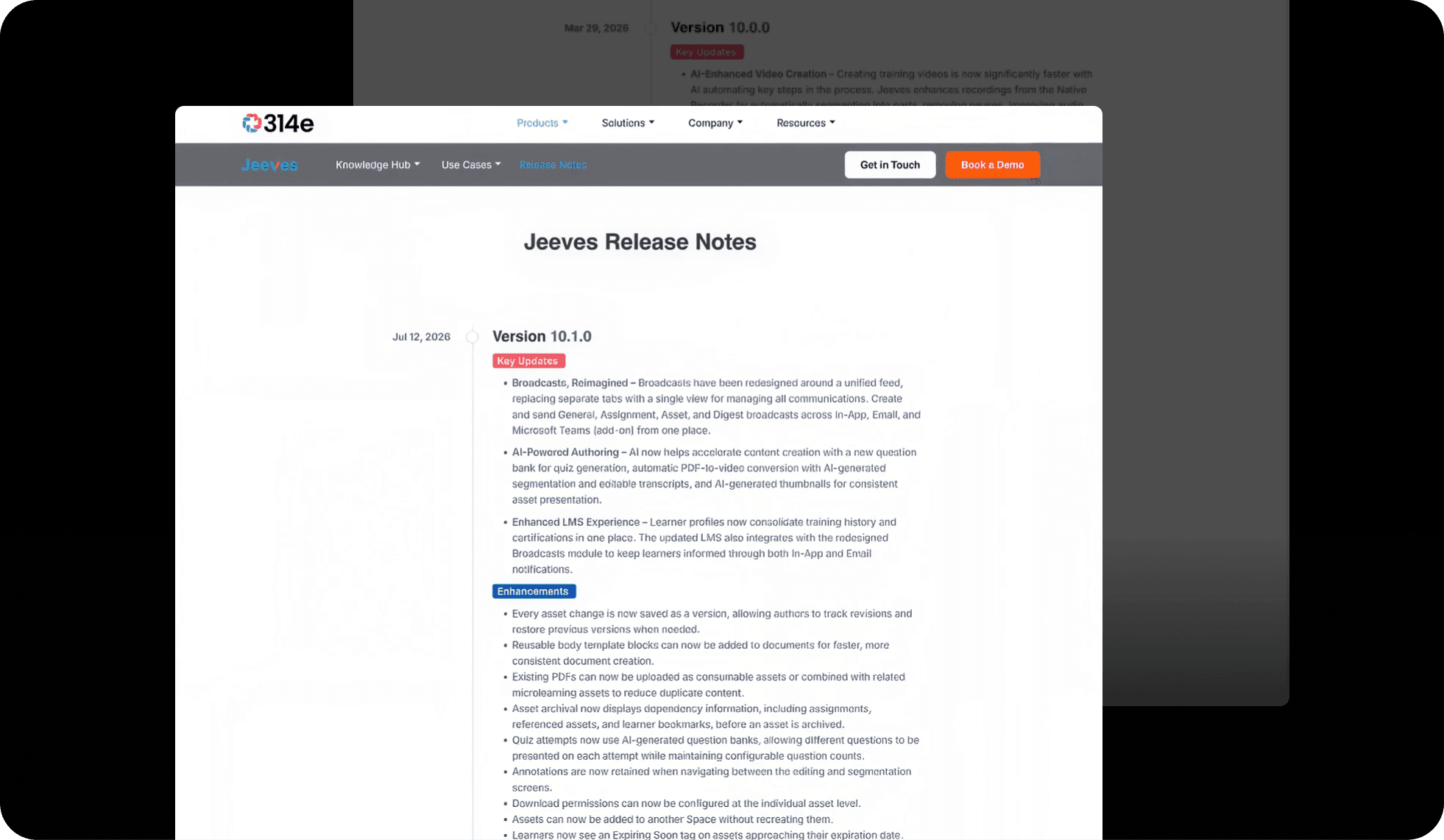
A release-notes page
Secondary-menu visual fixes
UX proposals for Settings and Assets
A complete in-product tutorial system (15+ videos)
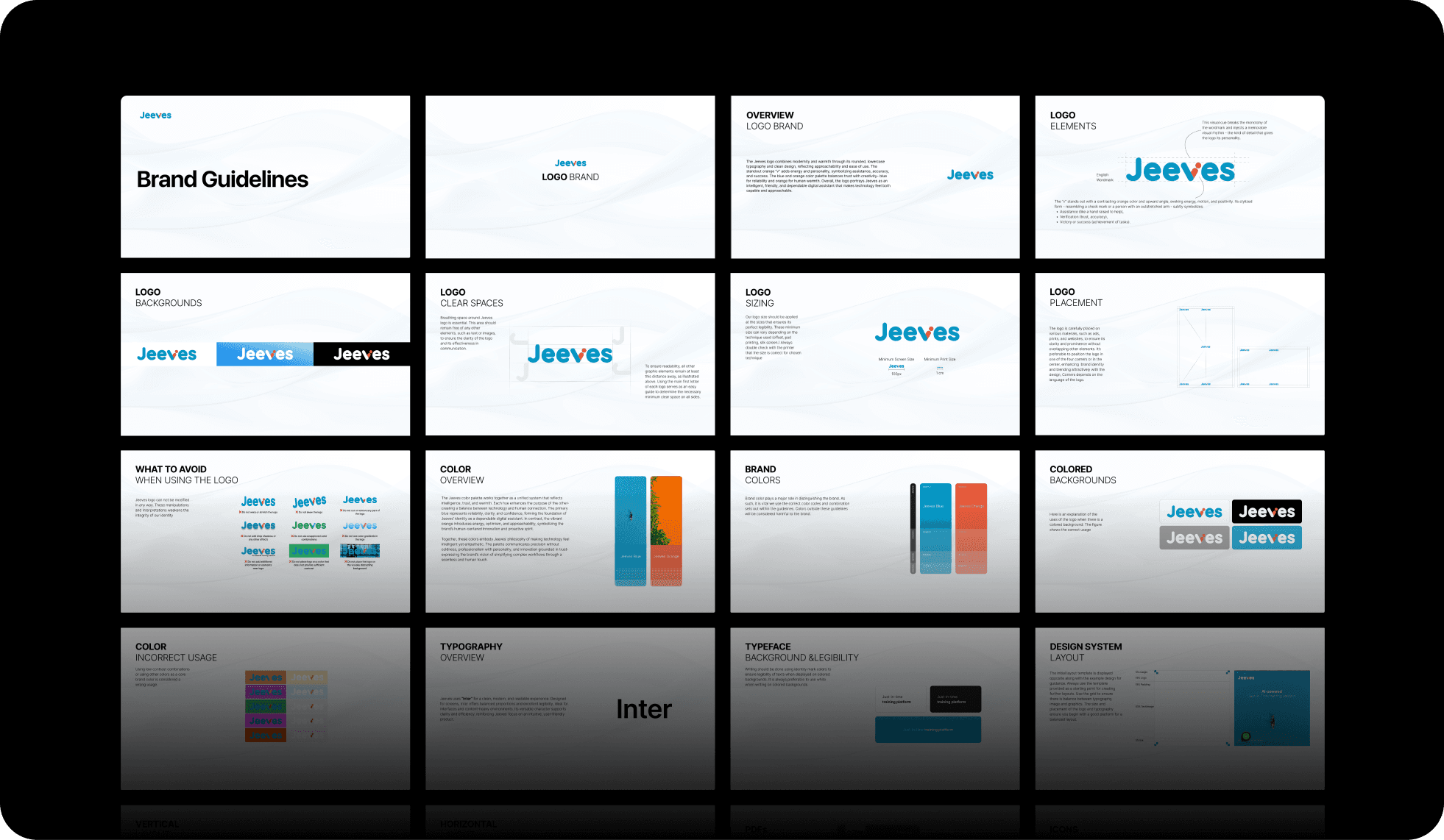
Full Jeeves brand guidelines
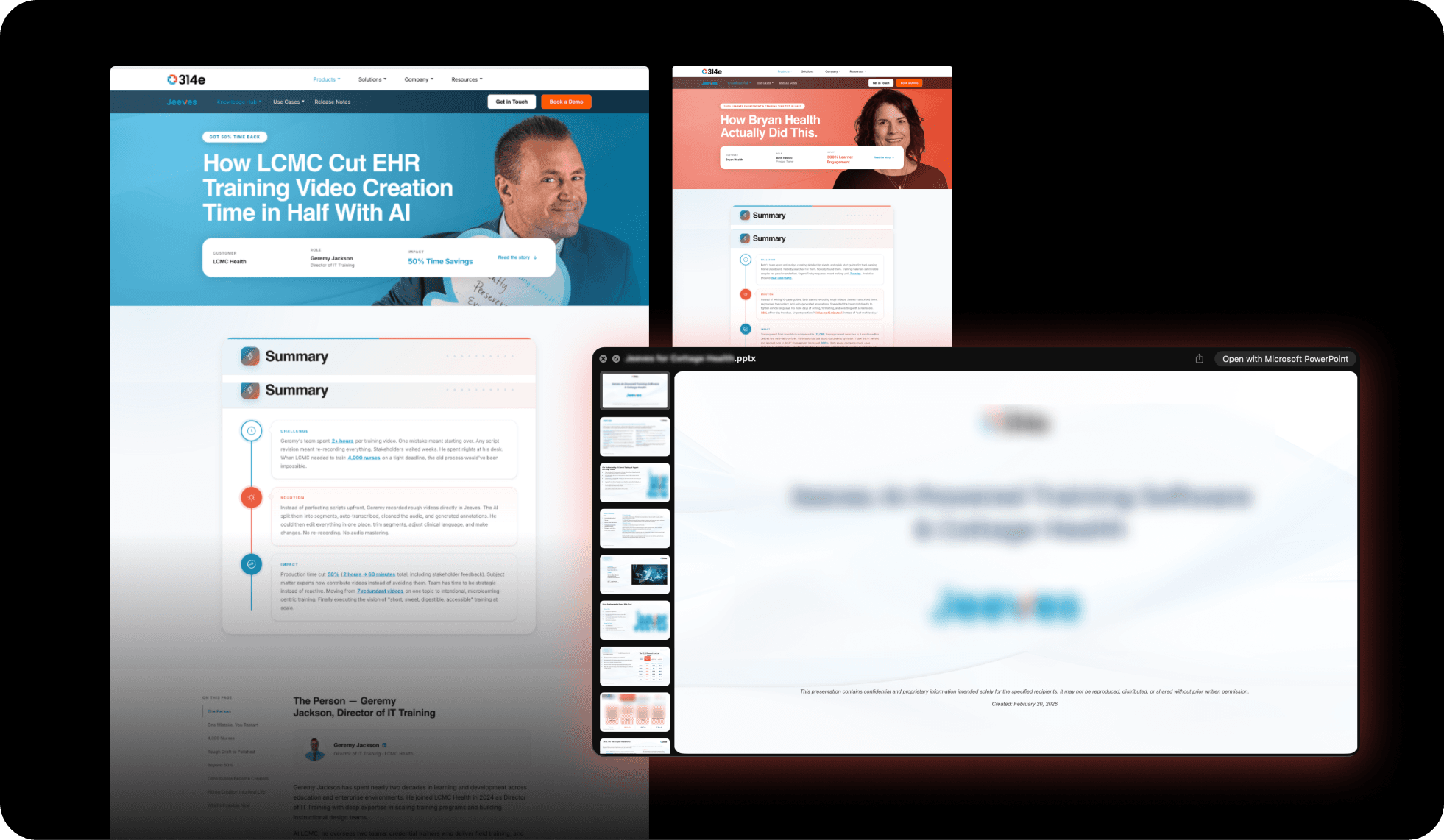
Sales decks and customer-story pages (Hub, LCMC Health, Bryan Health)
05 · Impact
The numbers from the customer stories
- 300%
- Increase in learner engagement
- 50%
- Less video-creation time
- 13,000+
- Training content searches
Every interviewed customer rated Jeeves "Very Satisfied." Across early-2026 support data, the UX-confusion category trended down as the help system and UI fixes shipped.
06 · Reflection
A systems problem in two disciplines
Jeeves stretched me across product UX and content design at the same time. Designing a help system (one template, one voice, mapped to every release) was a systems problem, and the Settings and Assets work pulled me into enterprise concerns like auditability and role-based needs. Both are exactly the kind of unglamorous detail that makes regulated software trustworthy.