The Frame That SellsProduct Shoots
A working process for styling and shooting product video across very different categories, each demanding its own light, prop, and pacing.
- Role
- Product videographer & art director
- Team
- Solo / with clients
- Timeline
- Commercial work, ongoing
- Platform
- Product video, commercial photography
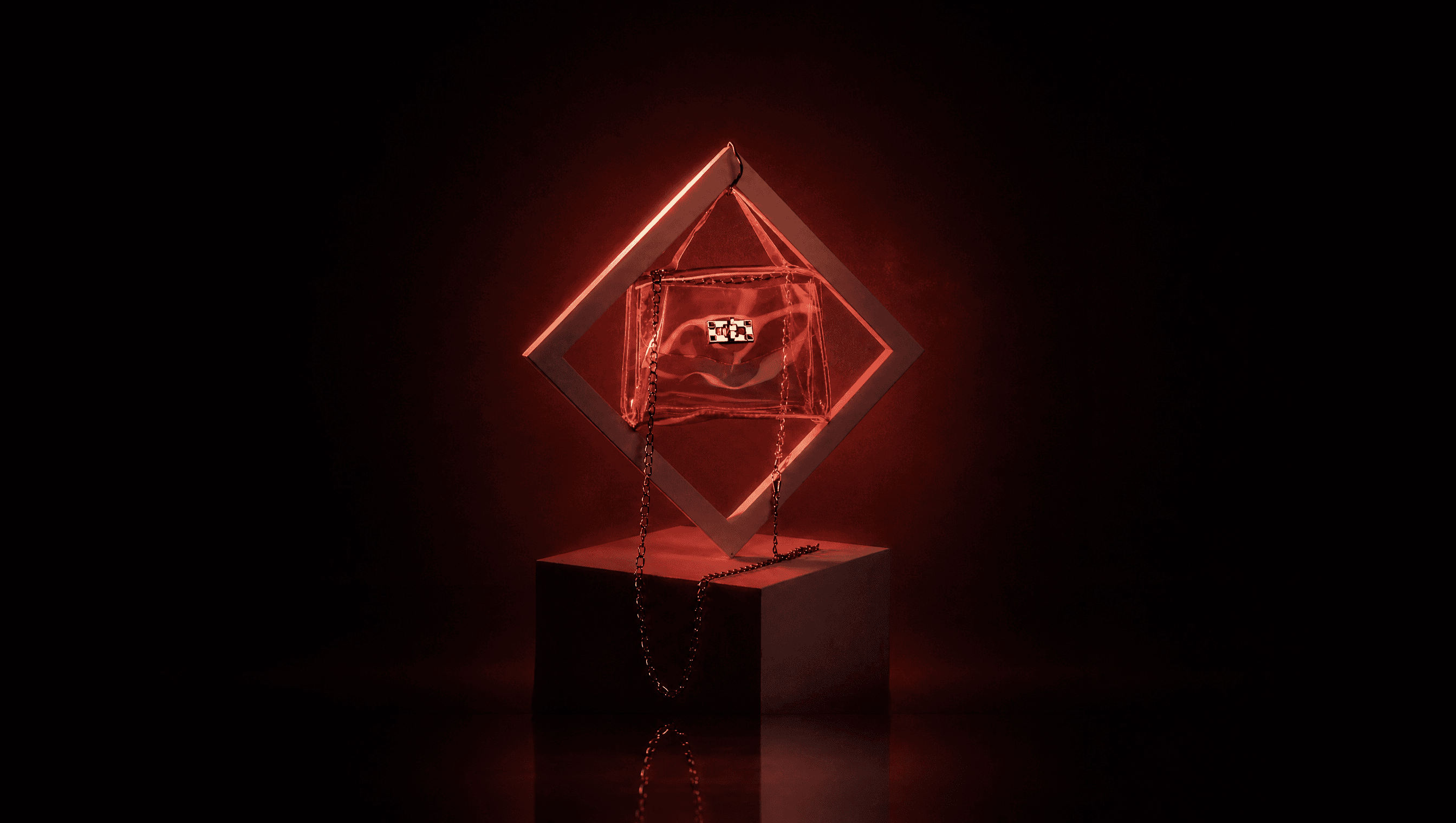
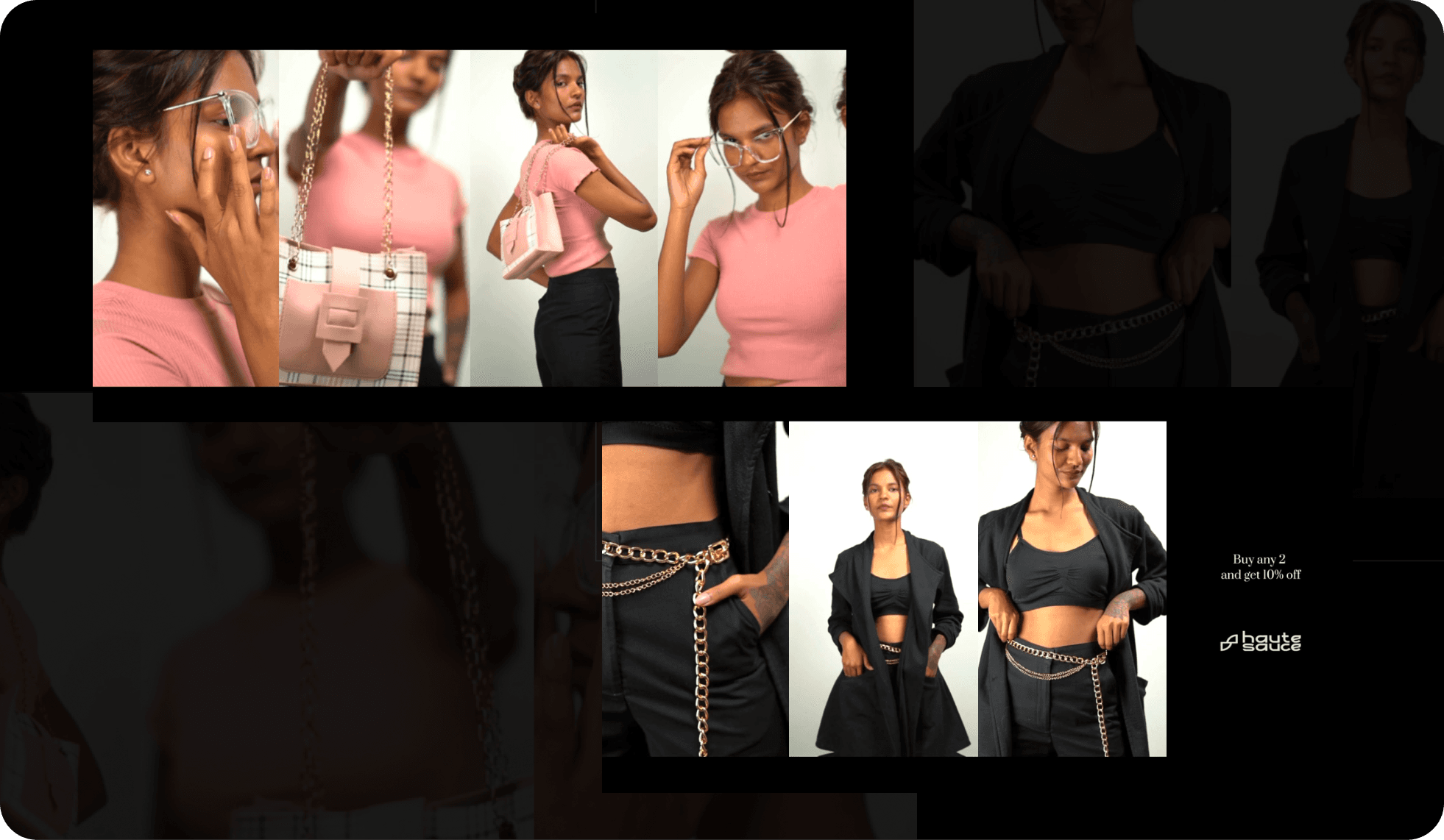
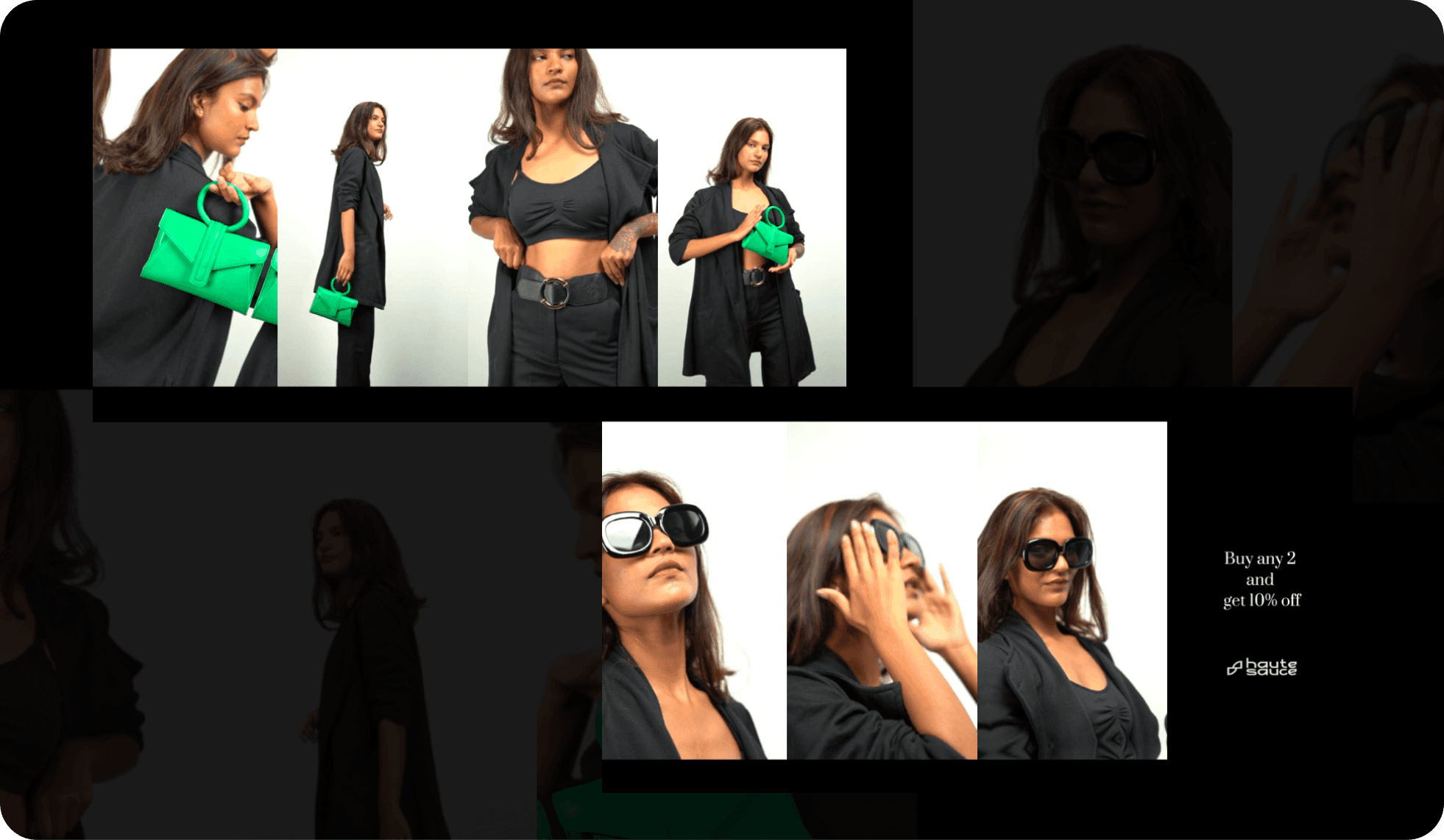
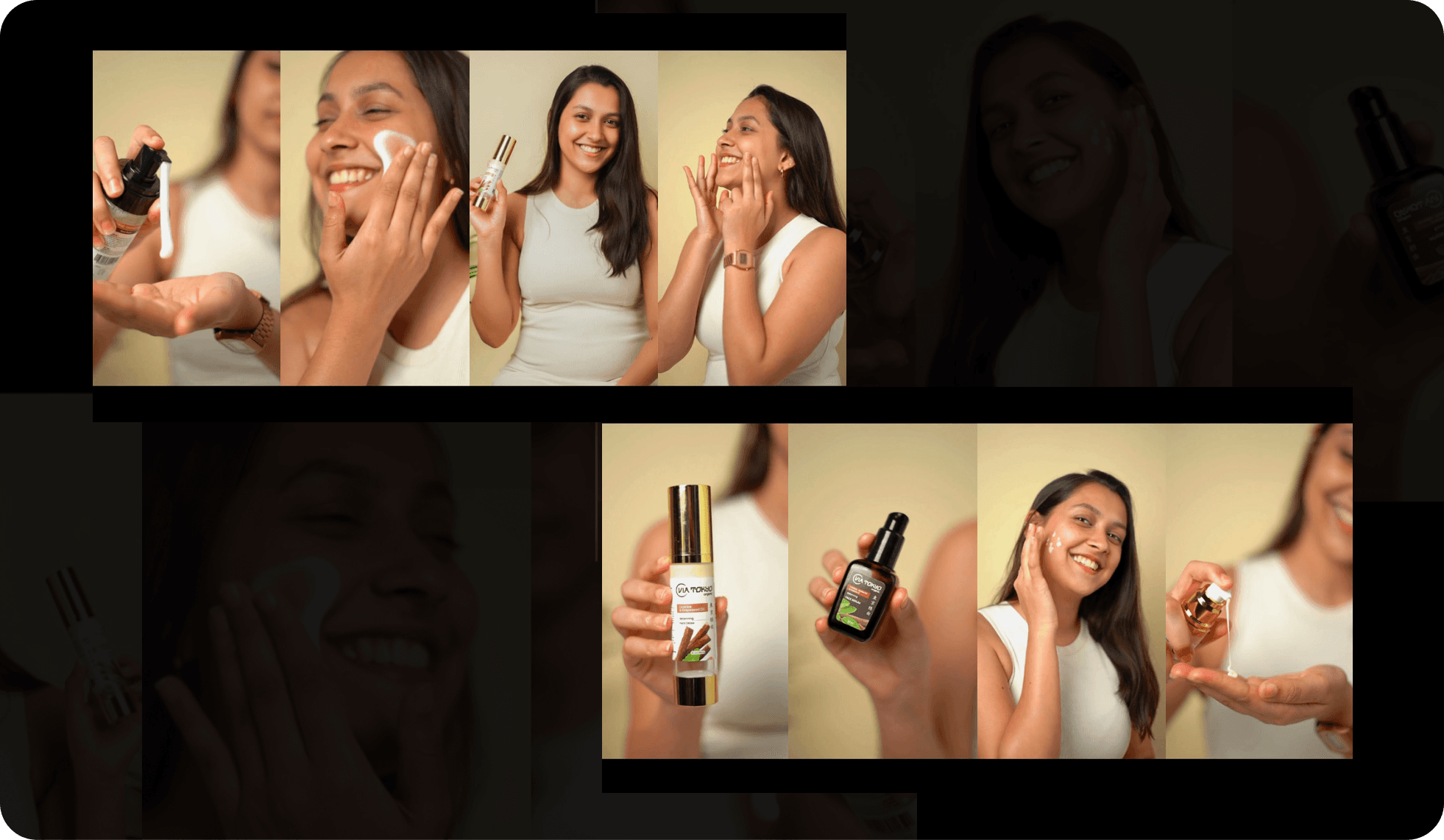
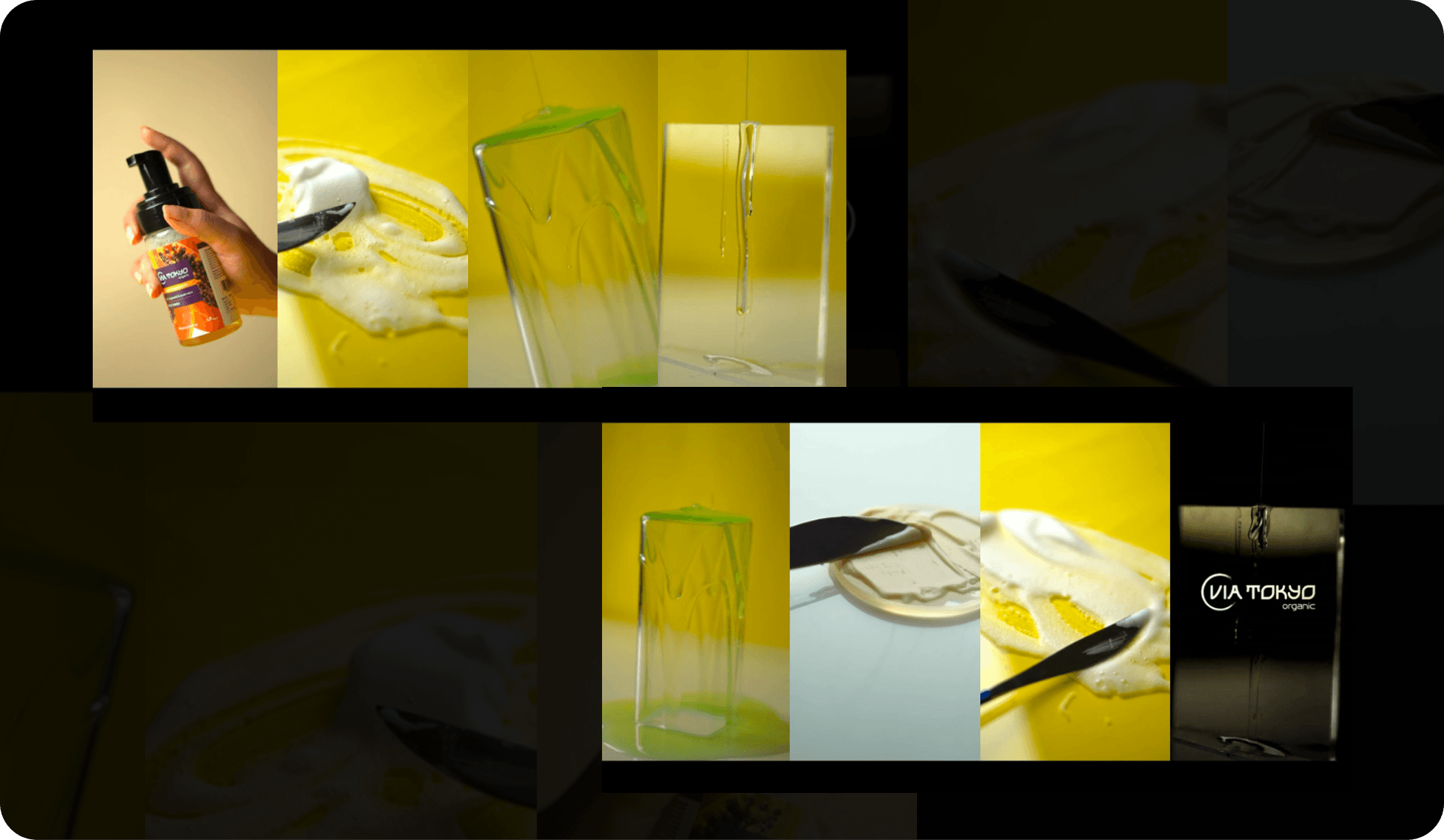
Commercial product video across supplements, jewelry, handbags, home goods, fashion, and skincare, for brands including VedaCulture, Via Tokyo Organic, and haute sauce. Every image here is a frame pulled from a finished video, not a separate photo shoot.
01 · Context
One skill, six very different products
Commercial product video across categories that have almost nothing in common: effervescent supplements, jewelry, handbags, home goods, fashion accessories, skincare. What stays the same across all of them is the goal, find the frame that makes someone stop scrolling and want the thing, whether that frame ends up as the video's hero shot or the still that sells it on a product page.
02 · Approach
The styling changes, the discipline doesn't
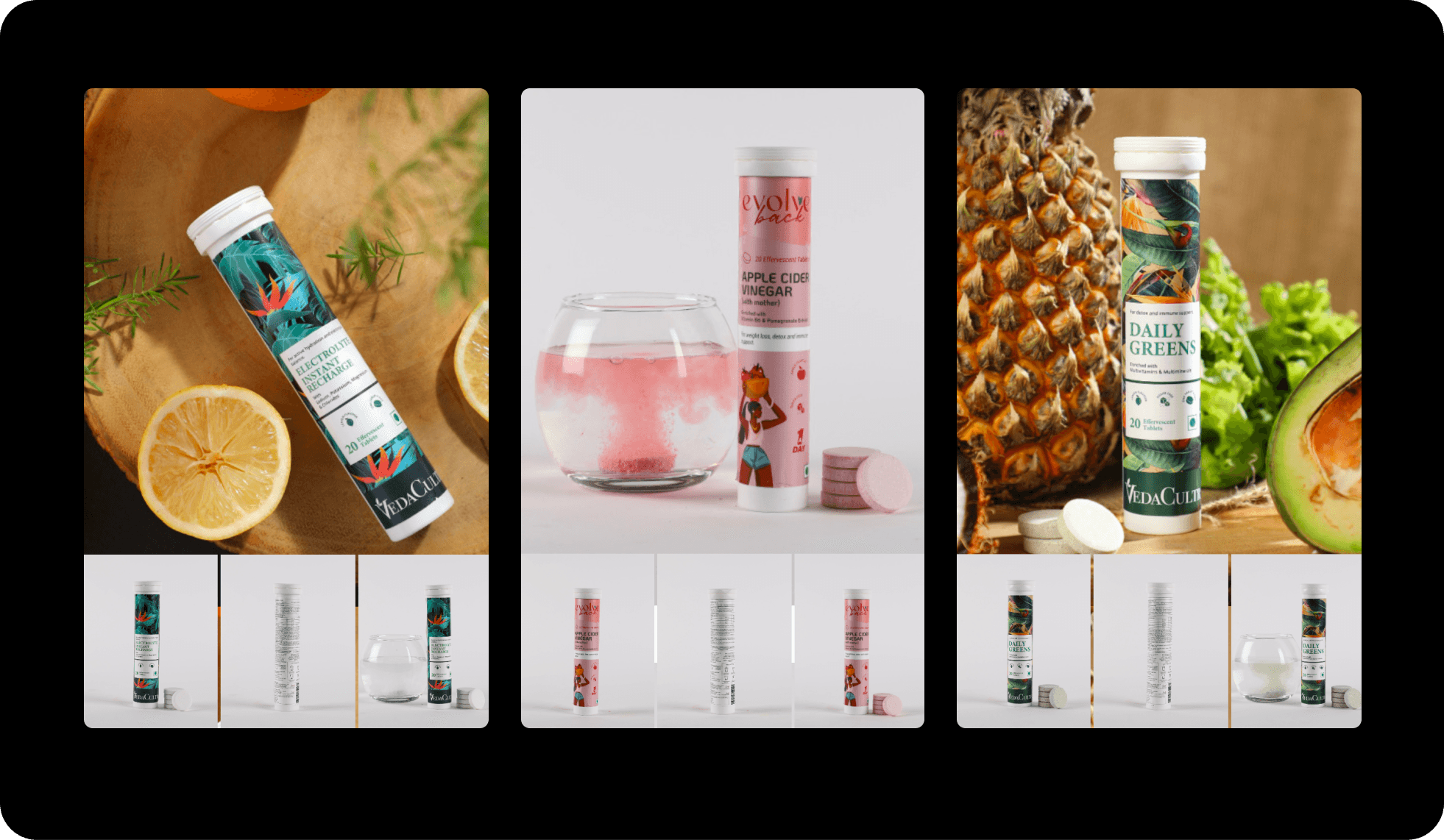
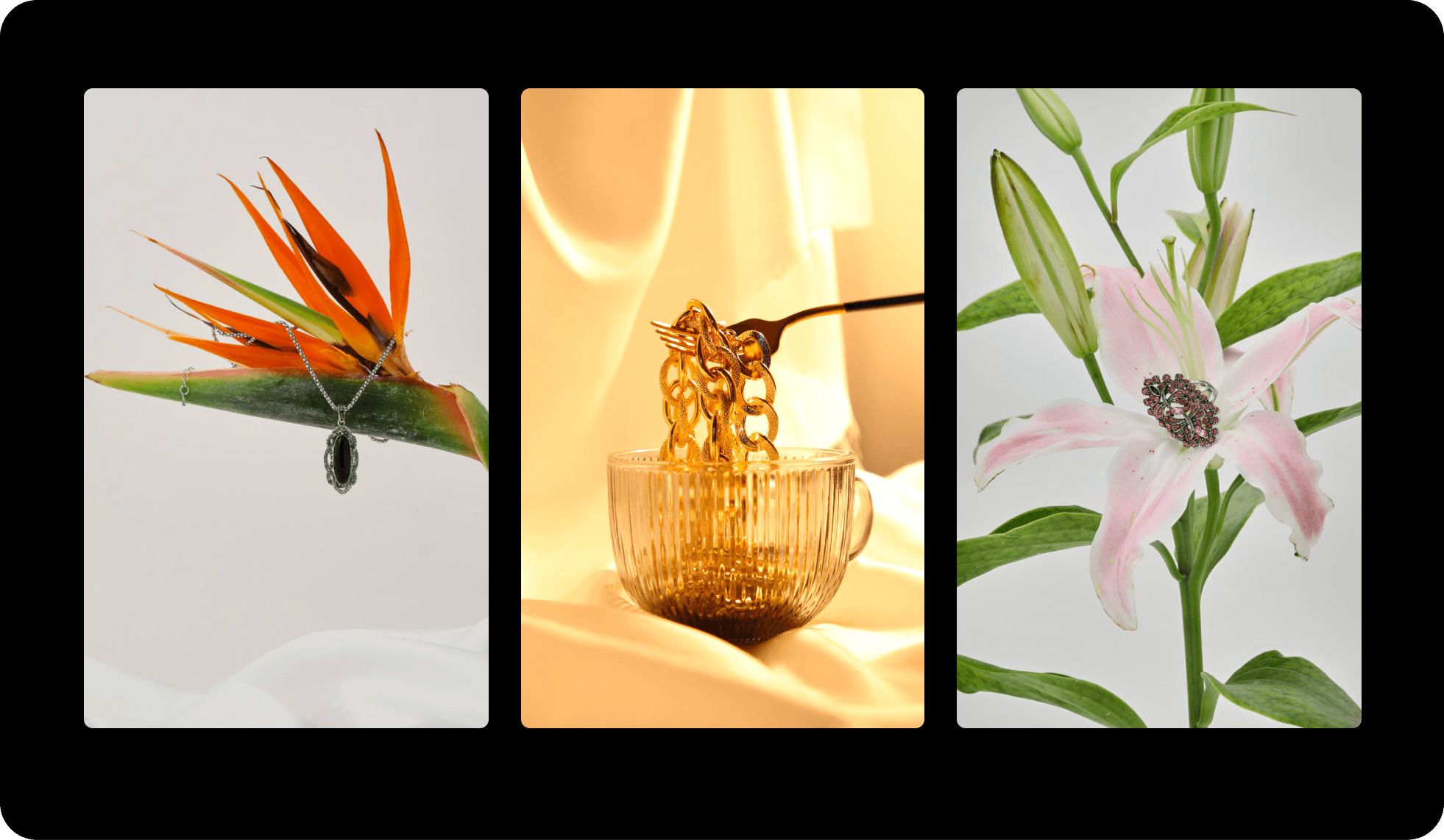
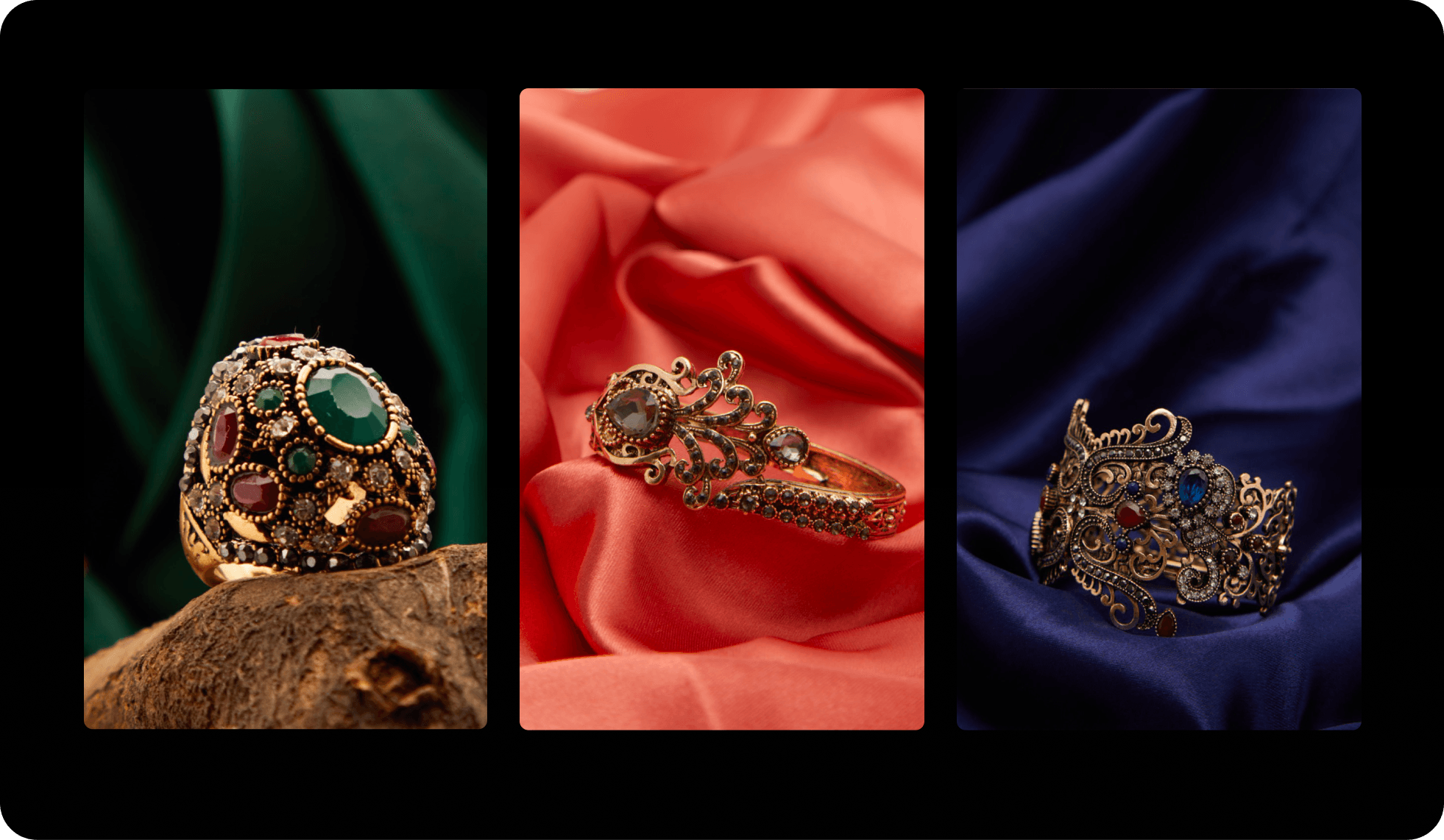
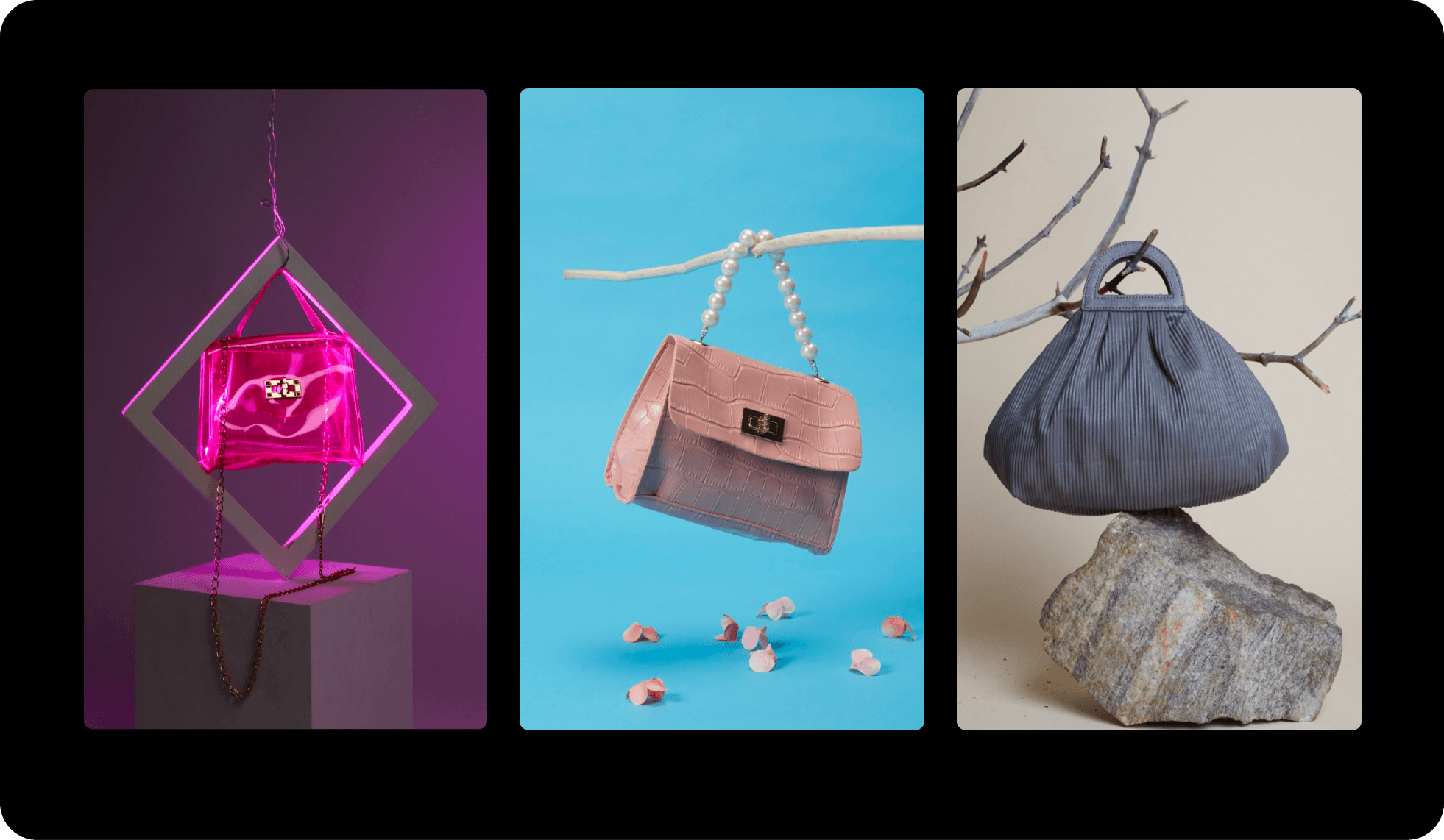
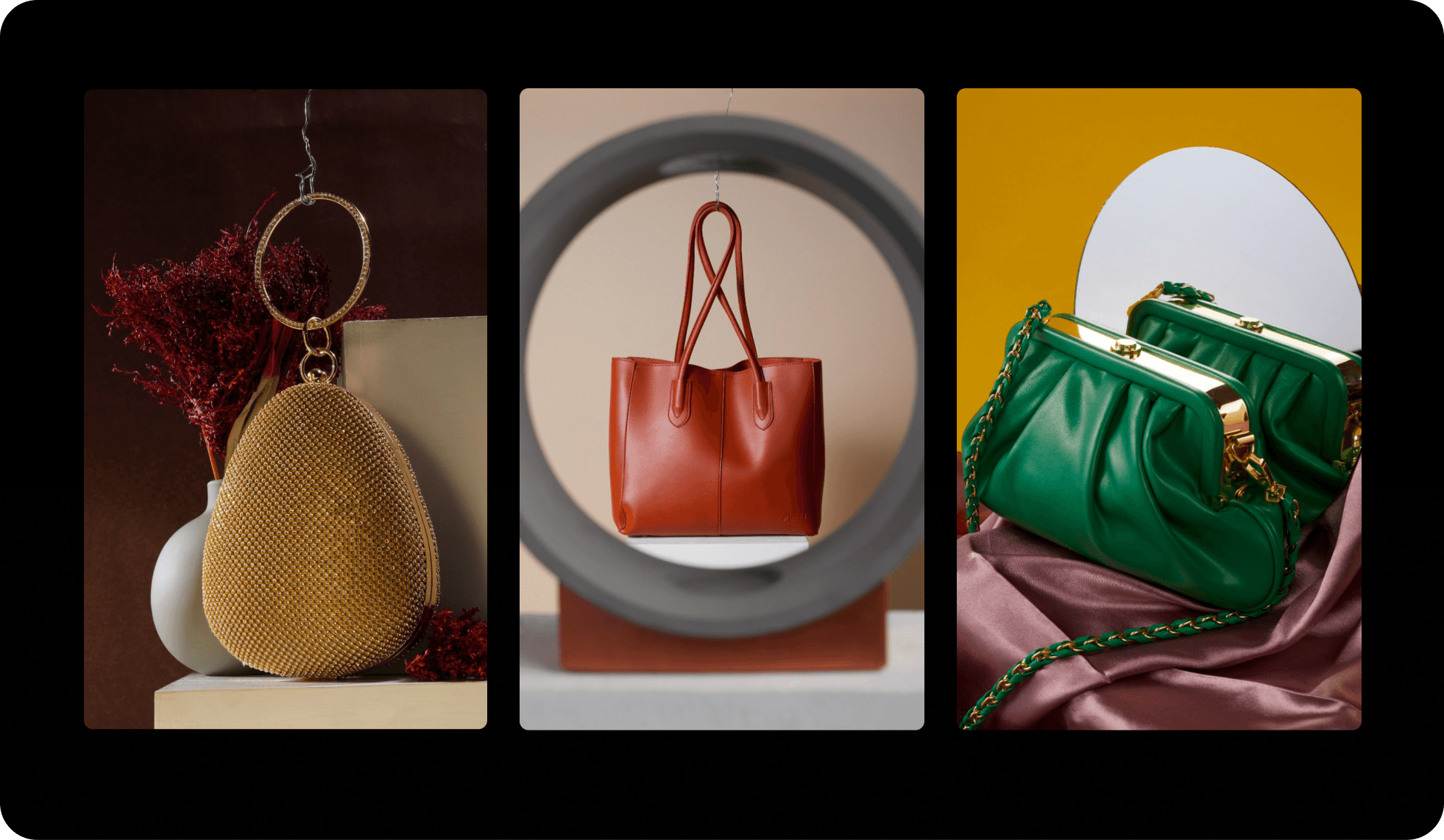
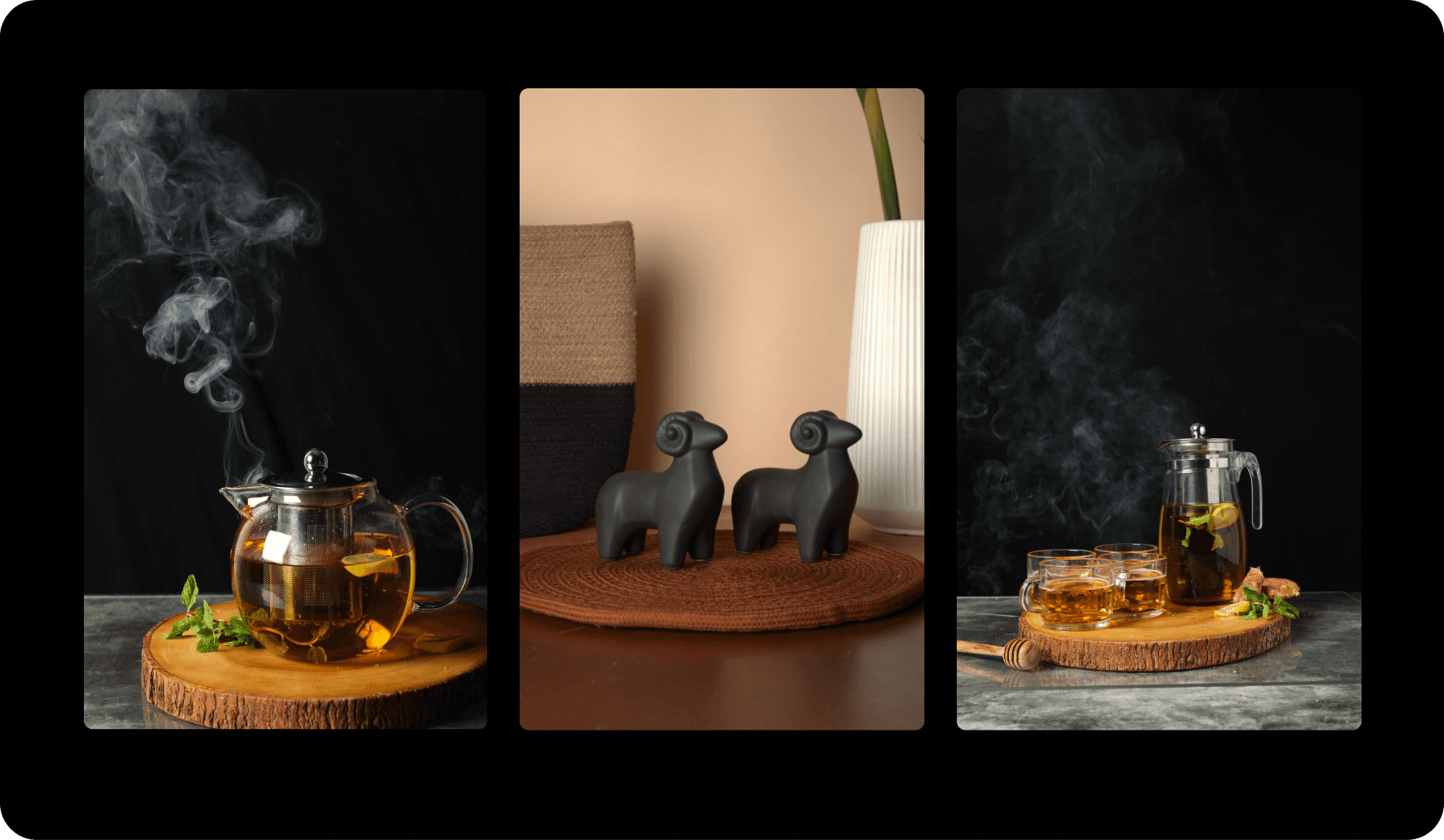
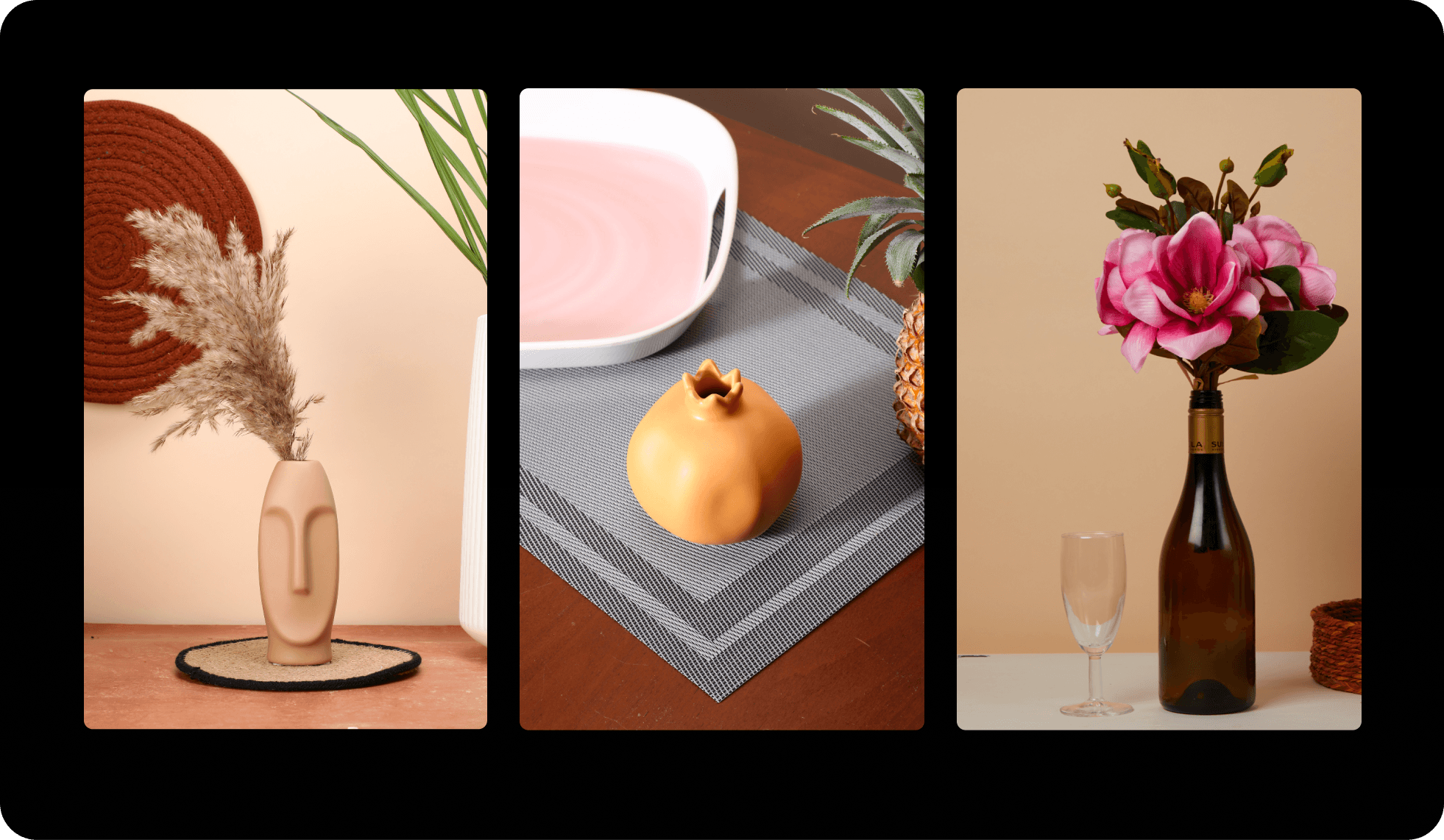
Every category asked for a different visual language. Supplements needed a clean hero shot plus the moment that actually sells them, the tablet fizzing and dissolving in water. Jewelry leaned surreal: a pendant on a bird-of-paradise petal, a chain of gold links served on a fork like food. Handbags got built environments, a neon-lit geometric frame, a branch strung with pearls, a bag balanced on a rock, so the product reads as a small scene, not a cutout. Home goods wanted warmth and believability: steam off a teapot, honey on a dipper, a vase you could picture in an actual room. Skincare needed a real person using the product on camera, since that category sells on trust more than polish.
Lighting and post. Underneath the different styling, the same three-light discipline holds: a key, a fill, a back light to separate product from background, tuned differently for glass, metal, fabric, and skin. Post keeps color consistent across a set and brings out texture, without pushing the product past what it actually looks like.
03 · Process
From brief to a frame worth keeping
- Brief and concept: what the product does, who buys it, and the one moment worth building a scene around
- Styling and light tests: props, backdrop, and lighting setup, tuned to the material (matte, glass, fabric, skin)
- Shoot the sequence: the full motion, not a single static setup, since the best frame usually isn't the first one planned
- Edit: cut the video, then pull the frames that work as standalone stills, hero shots, thumbnails, social crops
- Deliver: finished video plus the still frames, sized for whatever the client actually needs
04 · The work
Six categories, six briefs
05 · Why it works
Craft meets conversion
Product video ties straight to sales: a frame that actually sells lifts clicks and purchases, a flat one quietly kills them. Working across six unrelated categories in one body of work means the technical skill (light, camera, post) has to hold up no matter what's in frame, while the creative call, which single moment out of a whole video is worth freezing, is a different judgment every time.